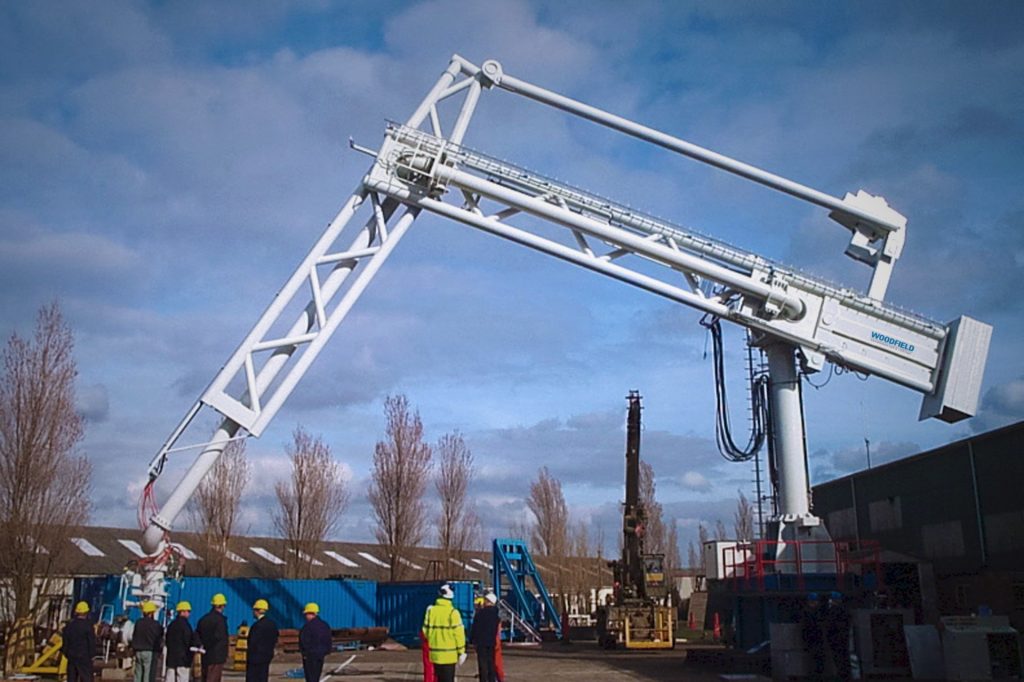
Stress and thermal analysis of an LNG marine loading arm
Transferring Liquid Natural Gas (LNG) from shore to ship and vice-versa at a temperature of -163 degrees Celsius presents a number of problems due to thermal shock and ice build-up on the transfer equipment. To help assess the behaviour of a new LNG loading arm design during cool-down, operation and subsequent warm-up Woodfield Systems Ltd (now part of Aker Solutions) employed LUSAS Consultancy Services.
By using LUSAS software it was possible to prove to the client Abu Dhabi Gas Liquefaction Co. Ltd (ADGAS) that its request for halving the cool-down period could be achieved without any detrimental effect on key components
Project info
Client: Abu Dhabi Gas Liquifaction Co Ltd (ADGAS) Consultant: Woodfield Systems
Detailed modelling of pipeline assembly
Thermal, transient and semi-coupled
What was done in LUSAS
Project facts or awards
Project facts or awards
Project facts or awards
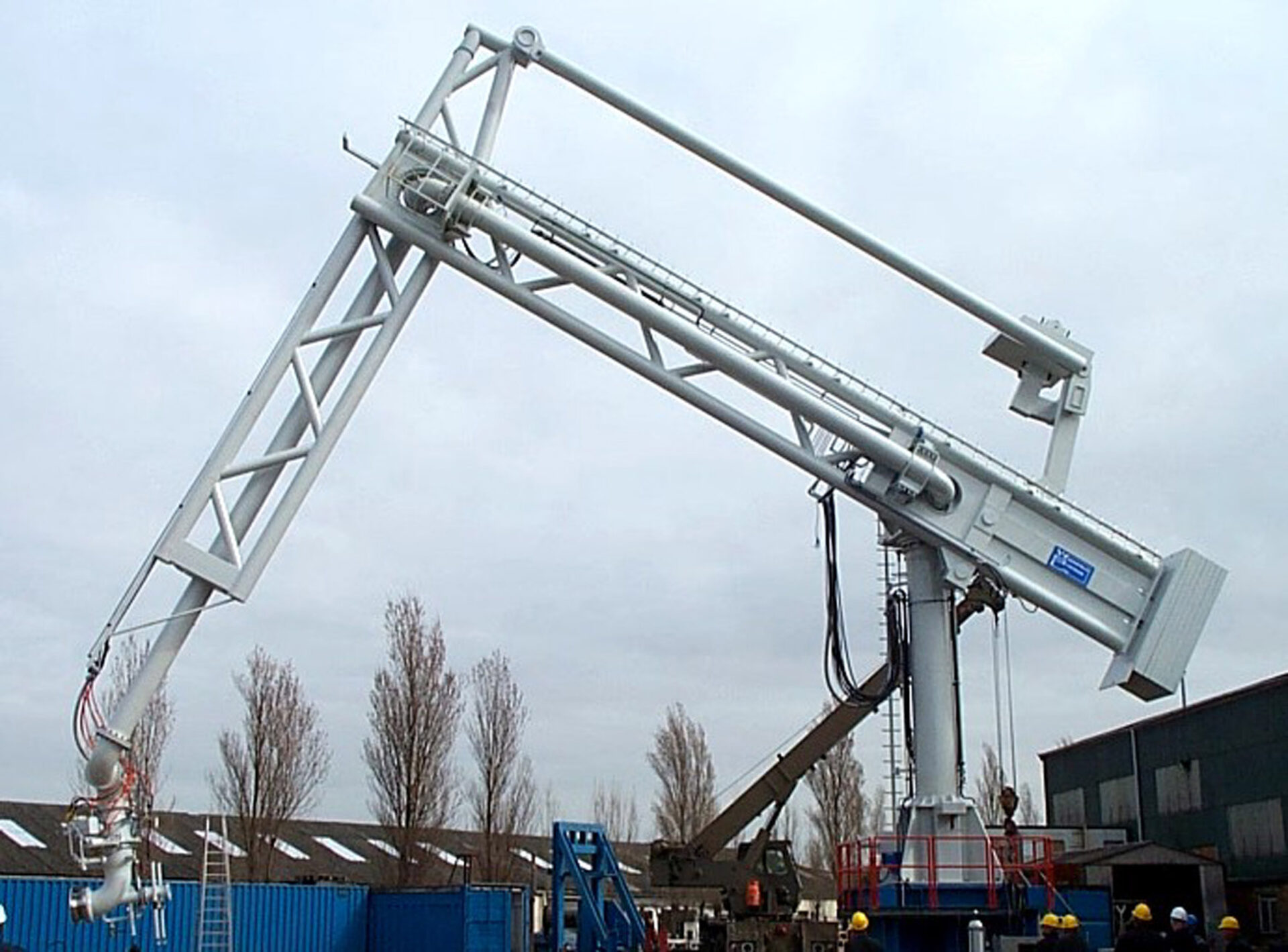
The 16 inch nominal diameter loading arm consists of a base riser contained within a pedestal fixed to the jetty and a system of articulated pipes attached to a counterbalance supporting structure. Swivel joints allow for movement of the arm in all planes and freely follow the motion of any tanker when connected. These joints are required to carry high loads and must not allow any product leakage. Before LNG can be transferred the loading arm components must undergo a cooling process to prevent thermal shock. Nitrogen and/or LNG vapour is pumped through the system initially, before LNG is introduced.
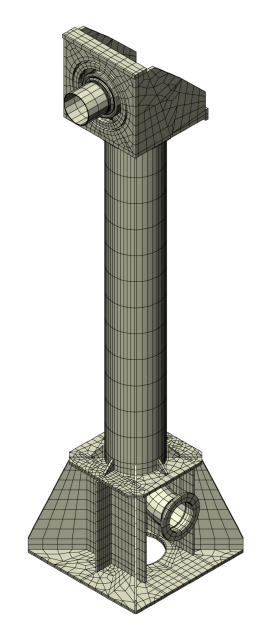
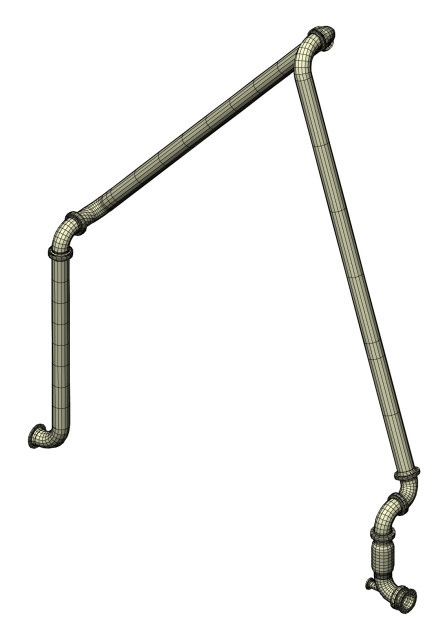
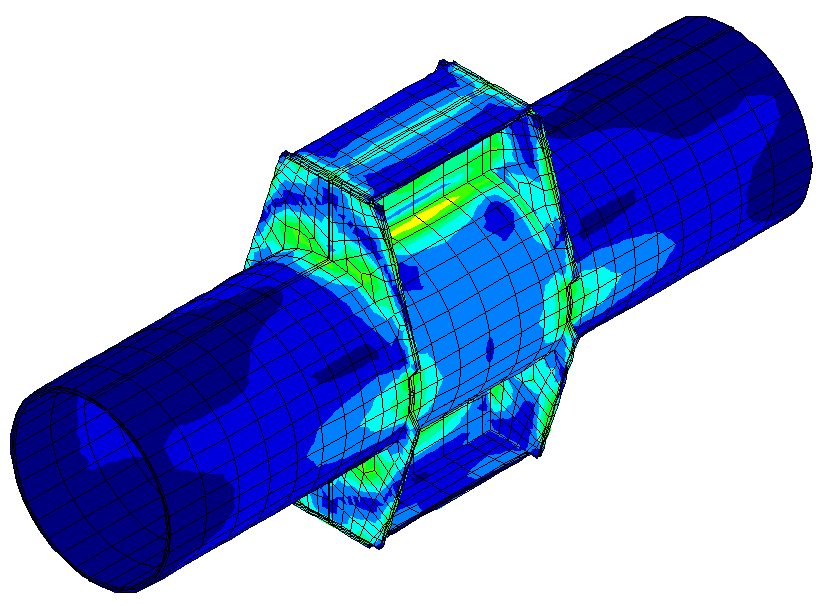
To fully investigate the effect of this cooling process numerous LUSAS analyses were carried out including steady-state thermal, steady-state semi-coupled thermo-mechanical, and transient semi-coupled thermo-mechanical, using four separate and very detailed finite element models.
Pedestal
Pipeline assembly
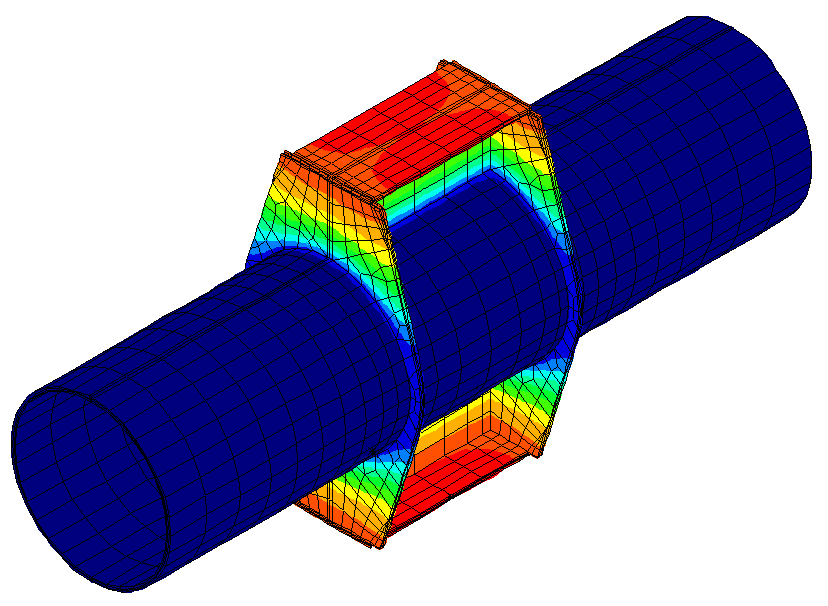
Thermal analysis of support bracket
Stresses in support bracket
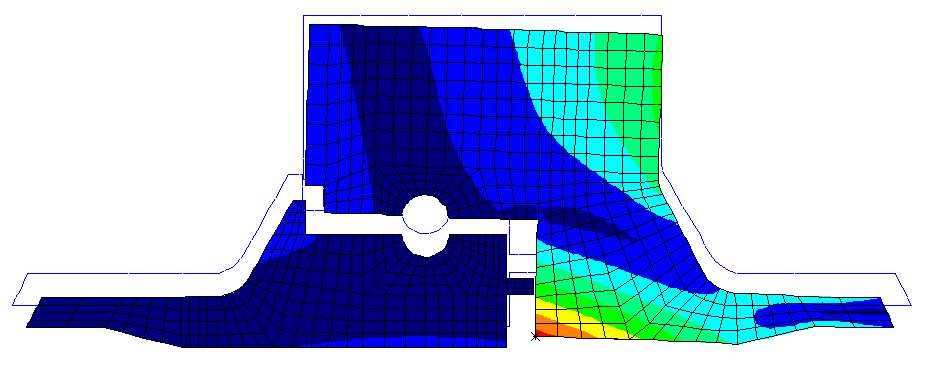
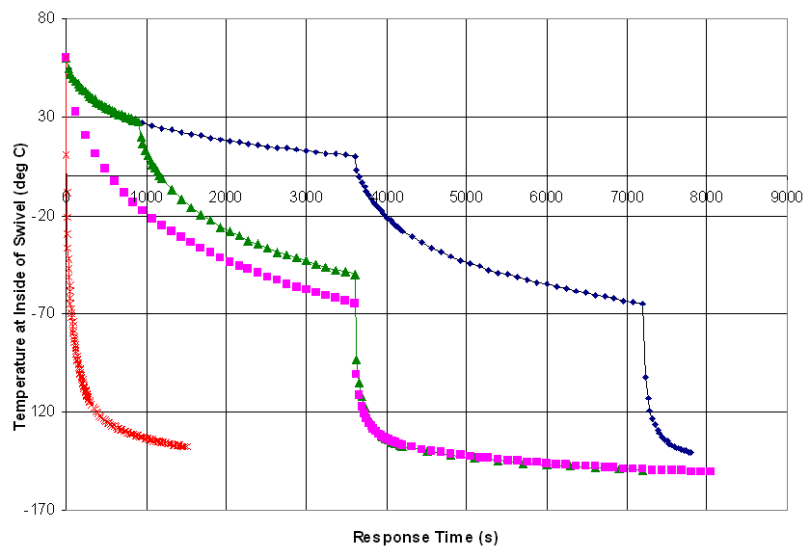
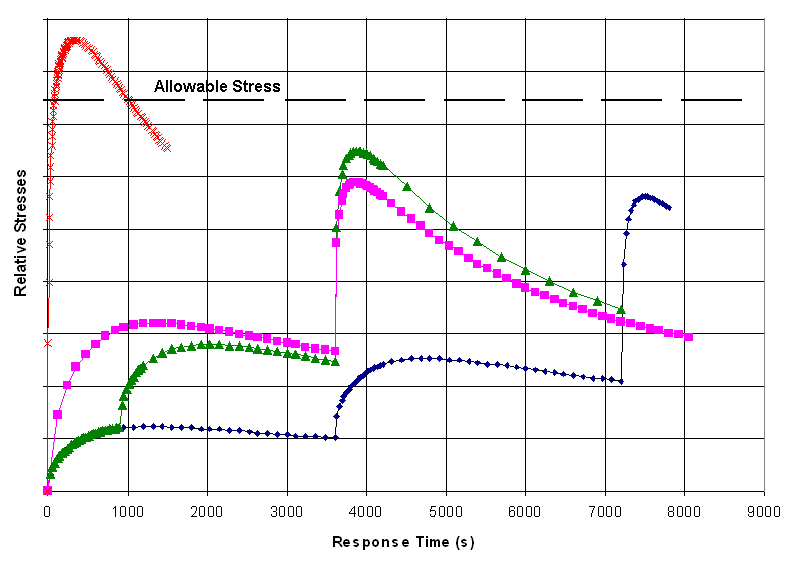
A 2D axisymmetric model of a swivel joint investigated its performance under a variety of transient thermal loadings. Thermal loadings give temperature profiles and thermal stresses that vary in time. As a result, graphs of time temperature histories and plots of von-Mises equivalent stresses and relative axial displacements for selected nodes on the swivel easily showed the different stages of the cooling regimes considered and helped assess whether the seals could maintain product sealing during cool-down and loading.
Axisymmetric model of swivel joint
Swivel temperature from cooldown scenarios
Swivel stresses from cooldown scenarios
Red Curve : An analysis assuming the introduction of LNG liquid with no prior cool-down period shows why prior cooling is necessary. Stresses exceed the allowable for the material chosen.
Blue Curve : A cool-down period of 2 hours (as used on the existing installed loading arms) using a mixture of nitrogen and LNG vapours produces the least stress on the swivel when pure LNG is introduced.
Green Curve : An investigative 1 hour cool-down period of 15 min Nitrogen/LNG mix followed by 45 min LNG vapour cools the system faster than the the 2 hour regime. However, this causes a corresponding increase in stress levels resulting in the peak level at the introduction of LNG being approximately 20% higher.
Pink Curve : A 1 hour cool-down using only LNG vapour produces the most favourable result. The system cools faster and whilst the stresses are the highest initially, the peak stress at the introduction of LNG is only slightly higher than that caused by the 2 hour regime. This is the recommended option.
By employing LUSAS as an independent consultant Woodfield Systems were to provide complete confidence to its client that the designs used would provide trouble free operation, improve vessel turn-around and give longevity of service.