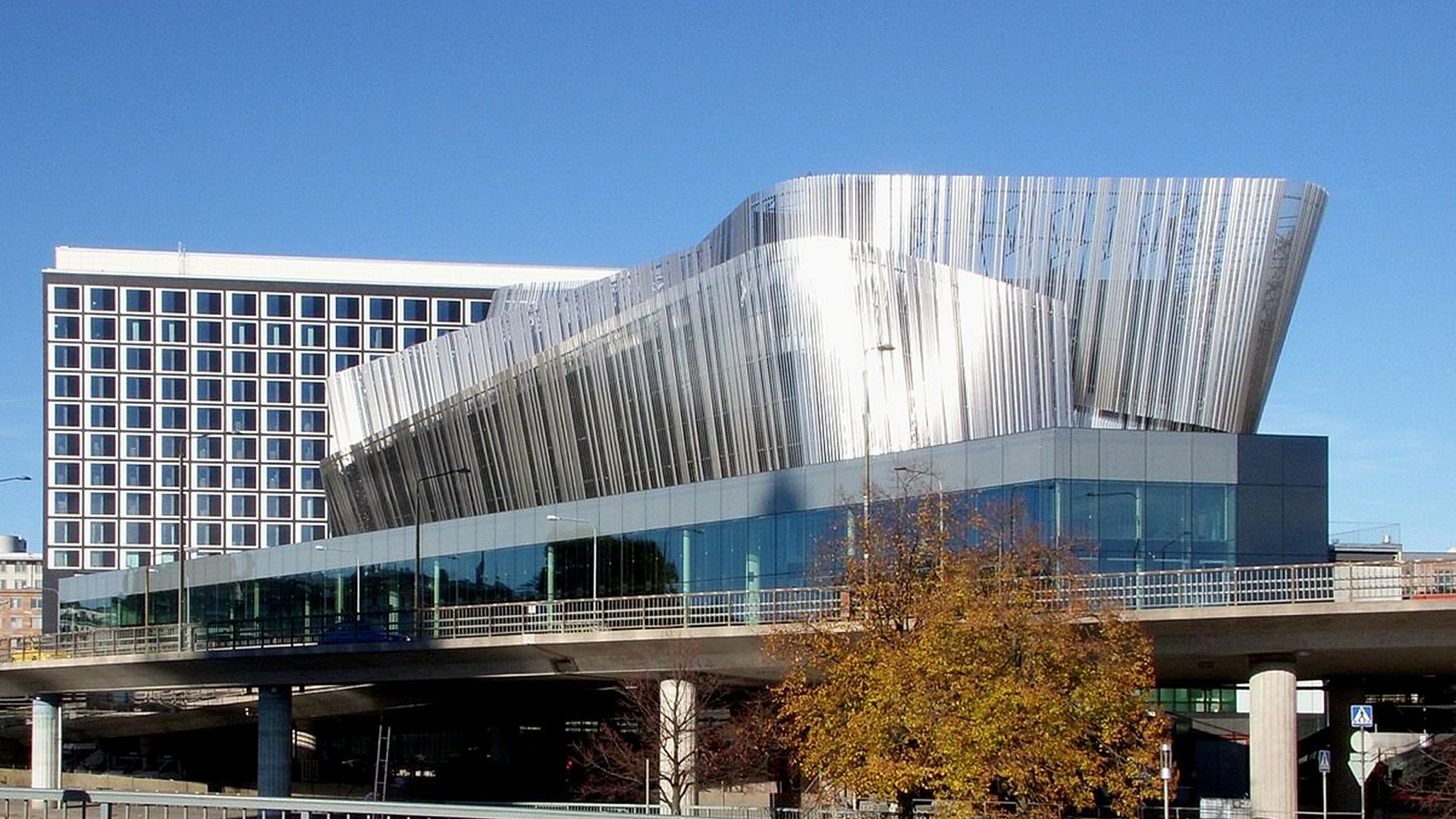
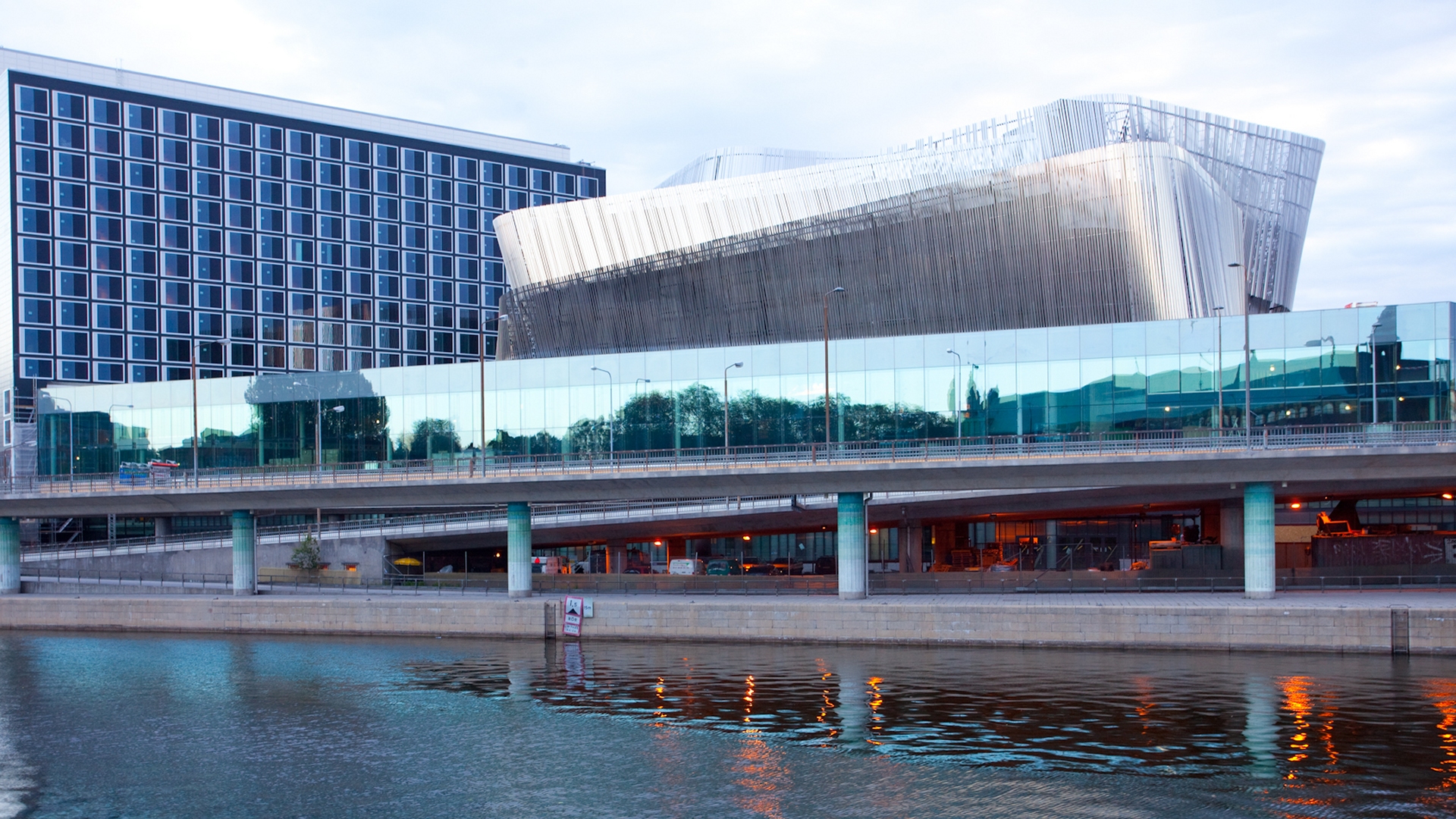
The Stockholm Waterfront Congress Centre houses a performance venue with a capacity of 3000 spectators, of whom more than half can be seated in a stand in a cantilevered part of the building. As part of its design, and because the venue could be used for pop concerts, ELU Konsult chose to use LUSAS Civil & Structural software to carry out a detailed analysis of the natural frequencies and mode shapes of the structure as a whole, and to evaluate the response of a cantilevered stand due to crowd loading at selected resonant frequencies.
Project info
Client: ELU Konsult
Frequency and mode shape assessment of structure
Evaluation of structural response of a cantilevered stand due to crowd loading
Project facts or awards
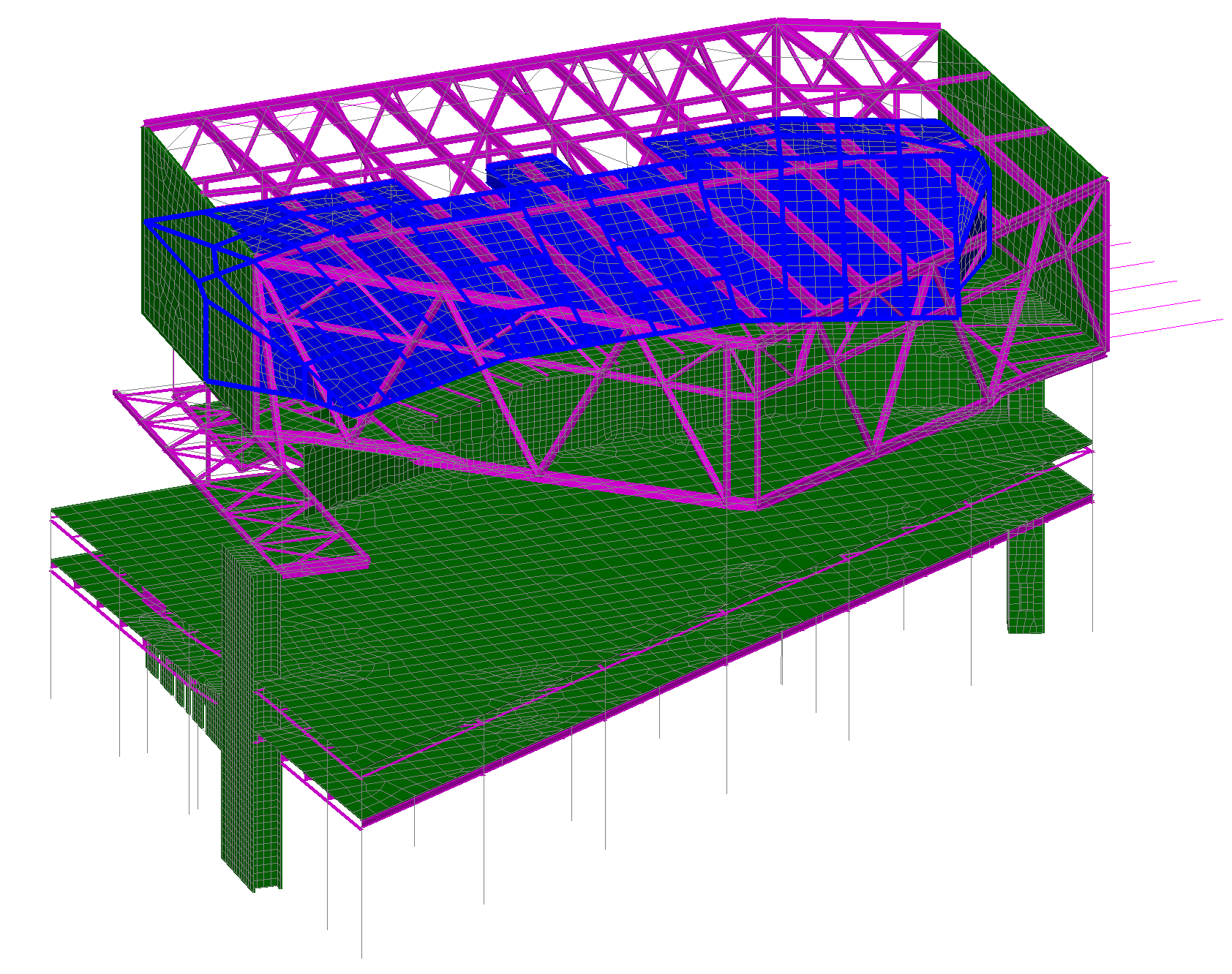
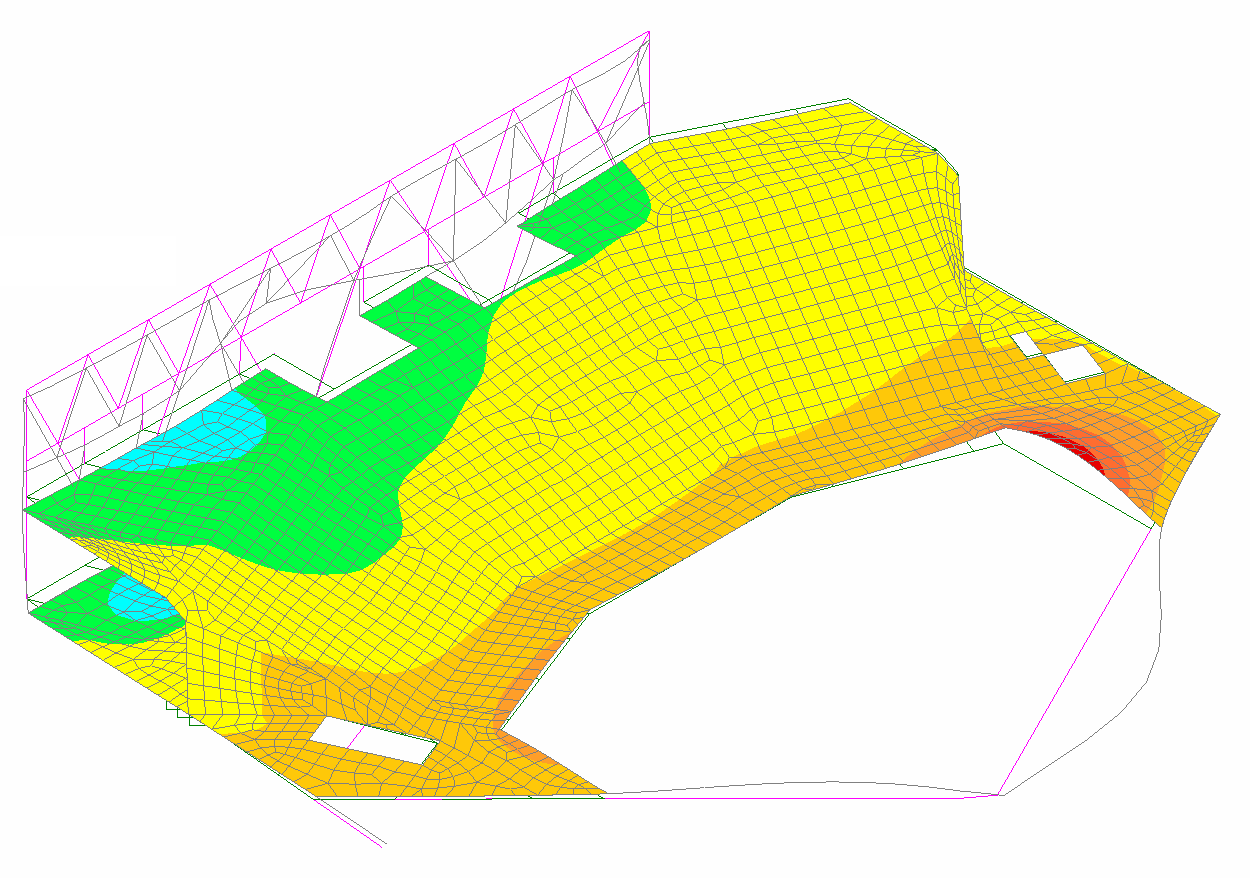
Model of Congress Centre showing the location of the main seating stand
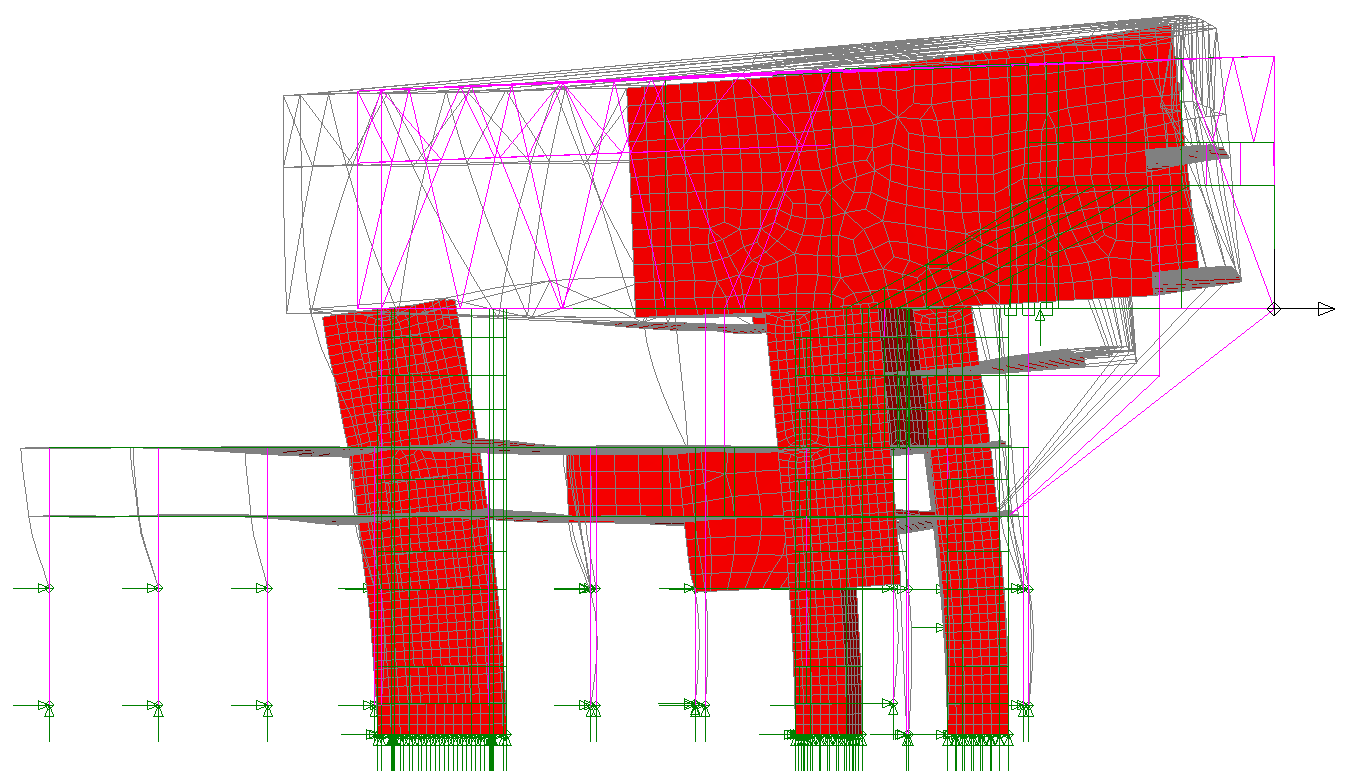
Horizontal mode in Y direction (1.62Hz)
Horizontal mode in X direction (2.16Hz)
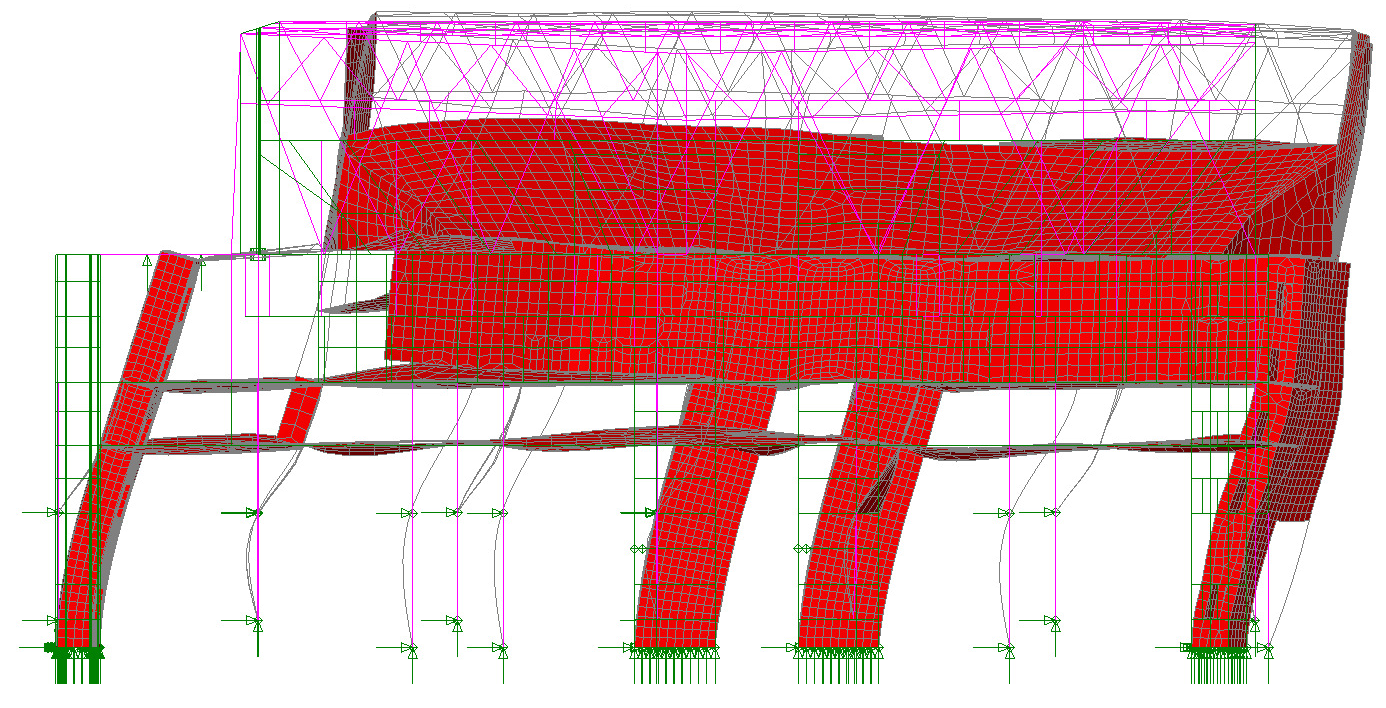
Vertical movement of the main support truss (2.228Hz)
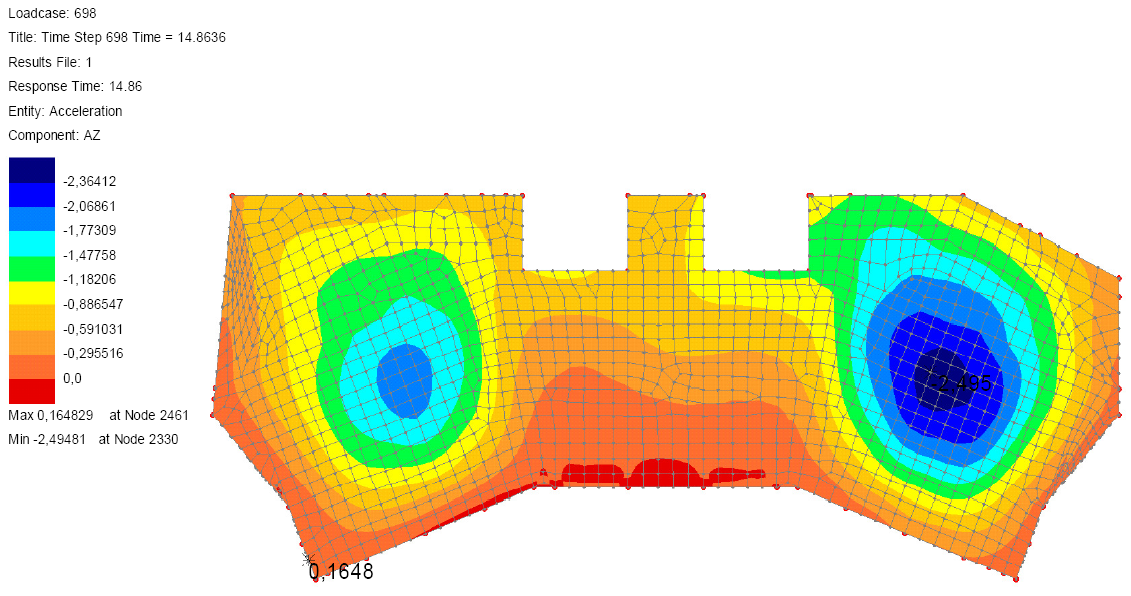
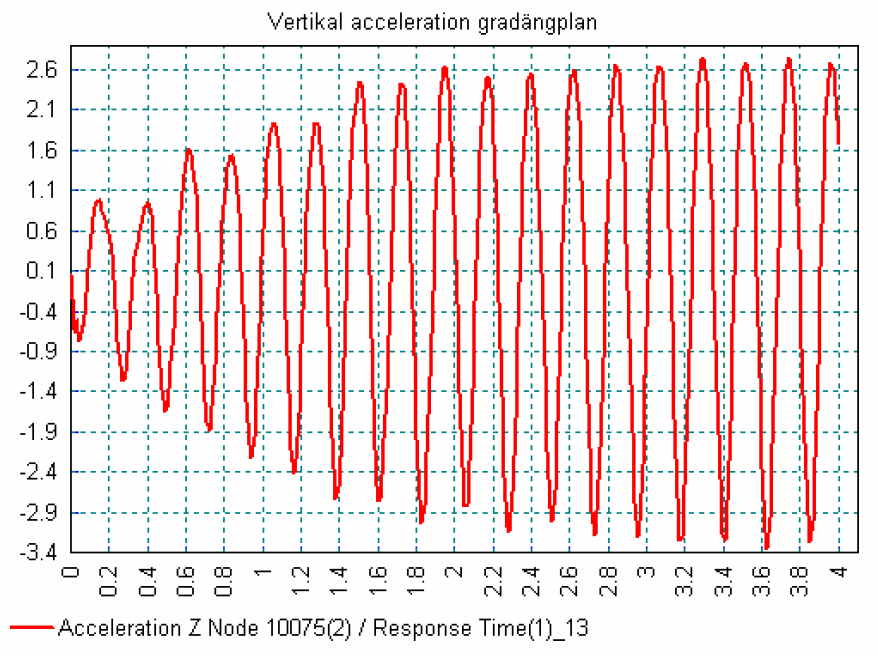
Vertical acceleration in the main stand for extreme event loading (Frequency load = 2.28 Hz)
Vertical acceleration in the main stand for extreme event loading (Frequency loadcase = 2.28 Hz)
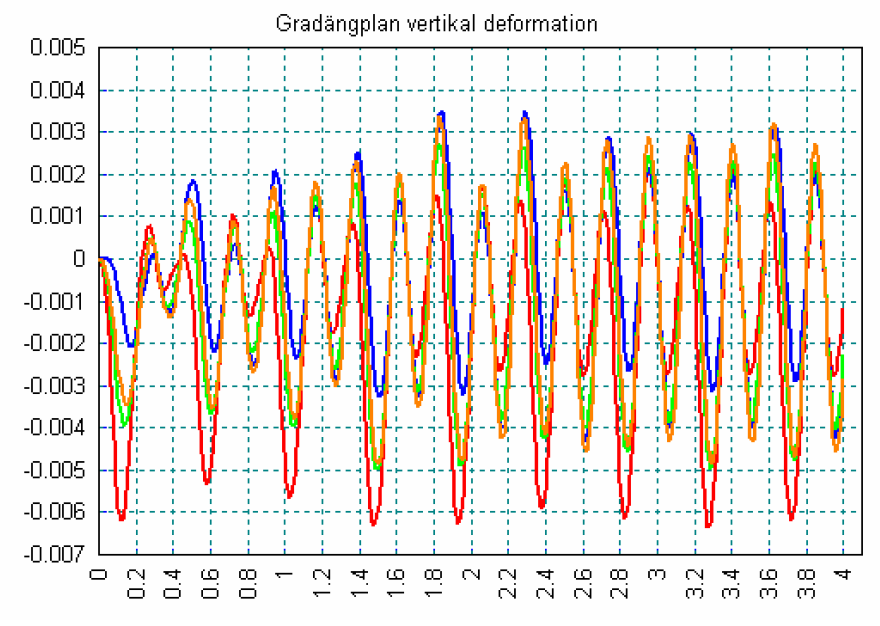
Vertical displacement in the main stand for extreme event loading (Frequency loadcase = 2.28 Hz)
Comfort conditions were analysed by looking at vertical and horizontal accelerations of steady-state harmonic motion response to a jumping crowd. For this, two primary loading events were investigated. The first was concerned with an extreme event where a young, energetic audience are jumping up and down in time with a certain frequency during a rock concert. The second was aimed at assessing how sensitive the structure would be for a less extreme event, termed a “lively concert”. For all crowd loading analyses Rayleigh damping values of around 2% were used. This value was considered reasonable for an initial analysis but a higher damping value of around 3% per cent was used in a number of cases to assess the significance of the damping value on the structural performance.
An “extreme event” loadcase modelled the effect of 1700 people moving up and down en-mass over the whole of the raked seating area. For this evaluation eigenfrequencies of 1.5 Hz, 1.62 Hz and 2.228 Hz were assessed. To model the “lively event” a patch load representing 50 people was applied as a uniform distributed load but only over a limited area of the stand in such a way that it maximized the loading effect for the two eigenfrequencies analyzed (2.228 Hz and 1.62 Hz). The effects on lower supporting levels of the structure were also investigated.
Following the initial design check the architects introduced a gap in the slab between two of the stand seating sections to allow for the installation of a folding wall to sub-divide the stand for smaller events. This required updating of the initial LUSAS model and re-analysing the effect on all considered loadcases. By comparing root mean square values of acceleration against project design criteria the Congress Hall was found to behave in an acceptable way with respect to audience comfort.
Using LUSAS it is easy to create and view complicated geometries and subsequently introduce modifications if they are required. The range of joint elements makes it easy to model the diverse and complex connections between structural members, and the assignment of loading is very straightforward.
Gunnar Littbrand, Senior Structural Designer and Costin Pacoste, Technical Expert – Numerical Analysis, ELU Konsult